Alvar Aalto for
five years he conducted experiments into the bending of wood. This research led
to Aalto’s revolutionary chair design. Having turned to laminated wood and
plywood as his materials of choice in 1929. These experiments resulted in
Aalto’s most original chairs, the No 41, Paimio and the No 31, Cantilevered Aalto
believed that his most important contribution to furniture design was his
solving of the old age problem of connecting vertical and horizontal elements.
No 41, Paimio
No
31, Cantilevered
Aalto due
to his new experiments of the bending of the wood, became a very successful;
his technique it is still in need in our furniture design. This technique
always was a huge help in the industry of wood. Today we use the bending of
wood in many types of furniture and new methods such as skateboards, new modern
furniture, boats and much more. The technique of how you do it is almost the
same as Aalto use to make them but also today we have machines that could help
us with the use in a faster and more efficient product. The bending of wood is
not only used in large elements but also in kitchenware or decoration.
The
Paimio and the Cantilevered are the best known for Alvar Aalto work and his new
idea of the invention of the bending of wood.

In
a similar manner with which Alvar Aalto worked with wood, Marcel Breuer
experimented with steel. Marcel Breuer is well known for his work on steel tubes,
it was a new technique of how one can work with steel. Where people had in mind
that steel is something strong and there is limited rules working on it, Breuer
showed them that it could be easily manipulated and still stay strong. He also
had a huge importance in the Bauhaus. On his stay he made the first tubular
metal chair B3 in (1925). His inspiration came from the handlebar of his
bicycle. As from then, he started to make all kinds of furniture such as
tables, chairs, stools and cupboards of that kind. He wanted to spread his idea
of sitting on “ springy columns of air”. Two of his most famous chairs are the
B3, the Wassily chair and the B32 Cesca
B32, Cesca
B3, Wassily chair
Today we
thank Marcel Breuer for this idea of the bending of steel where we can design
and can make our lives easier by this technique. Today we use this method in
cars, bicycles, cutlery and much more. Similar examples are still used in
furniture today. He can be regarded as one of the most influential and
important designers of the 20th century.
These two
designers came from different eras; Alvar Aalto from the organic design, and
Marcel Breuer is from the era of the Bauhaus. They both worked differently and
came up with distinctive designs but they both worked on similar things; the
bending of material one on wood and the other on steel. They both produced
brilliant products.
Many designers try to
manufacture or else try to be better than these two designers from the first
decades of the 20
th century, but still produce similar products, or
else follow these two fathers of designs. Some examples of today modern
products that been influenced by these two designers are:


J. Persing designs modern furniture and he uses the
technique of Alvar Aalto used, the same material, the plywood and the same
method. The only thing that it might change a bit is that this furniture that Persing
designed are molded from a single piece of wood.
Referencing:
Kino
Guerin is another designer of the 21st century he also follows the
rules of Aalto it is just his furniture it is a bit extreme of how he bends it.
This is because he wants his furniture without using legs or some kind of
support. His work is amazing but in another way it is a bit extreme.
 When an artist combines artistry with function and clever design,
well, then I’m sold! The “Why Knot Bench” (above) takes the traditional
form and then gives it a huge twist at one end – like a bow on your favorite
gift. This is a great furniture statement piece for an entry hall to let
guests know that a mischievous spirit inhabits the dwelling!
When an artist combines artistry with function and clever design,
well, then I’m sold! The “Why Knot Bench” (above) takes the traditional
form and then gives it a huge twist at one end – like a bow on your favorite
gift. This is a great furniture statement piece for an entry hall to let
guests know that a mischievous spirit inhabits the dwelling!
This chair is called Steel-Armed Bend Chair is
manufactured by West elm a company of furniture design. In this chair we see an
almost photocopy of what Marcel Breuer did to the Wassily chair. The only thing
different is instead of a tube structure it is flat and not in every corner is
bended. The seat angle is almost the same as Breuer’s chair the only thing
distinctive is that instead of canvas they used a more foam, comfortable
materials.
Referencing:
Steel- Armed Bend chair. (Year N/A) west elm. [Online] Available from:
http://www.westelm.com/products/steel-armed-bend-chair-shale-h200/?pkey=cliving-room-seating&cm_src=living-room-seating%7C%7CNoFacet-_-NoFacet-_--_-
[Accessed: 3rd March 2014]
Reference:
Bernard
Polster, Claudia Neumann, Markus Schuler and Fredrick Leven, 2004. The
AZ of Modern design
Charlotte
and Peter Fiell. Design of the 20th Century
: Alvar Aalto Design Museum Collection, (Year N/A) Design Museum Alvar Aalto [Online] Available from: http://designmuseum.org/design/alvar-aalto [Accessed: 19th January]
 As part of our brief we had to do an individual chart. This had to
contain 5 designers from distinctive eras. This could be done either with
Photoshop or other program or else handmade. As I am not really well in design
programs I stayed to the handmade chart. I could be much more creative.
As part of our brief we had to do an individual chart. This had to
contain 5 designers from distinctive eras. This could be done either with
Photoshop or other program or else handmade. As I am not really well in design
programs I stayed to the handmade chart. I could be much more creative.  Red Blue Chair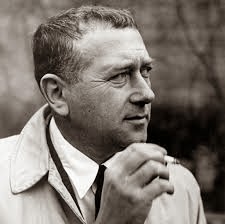
 Wassily Chair


 After Spring/ Before Summer Chaise Lounge
 Verner Panton
 Panton chair


